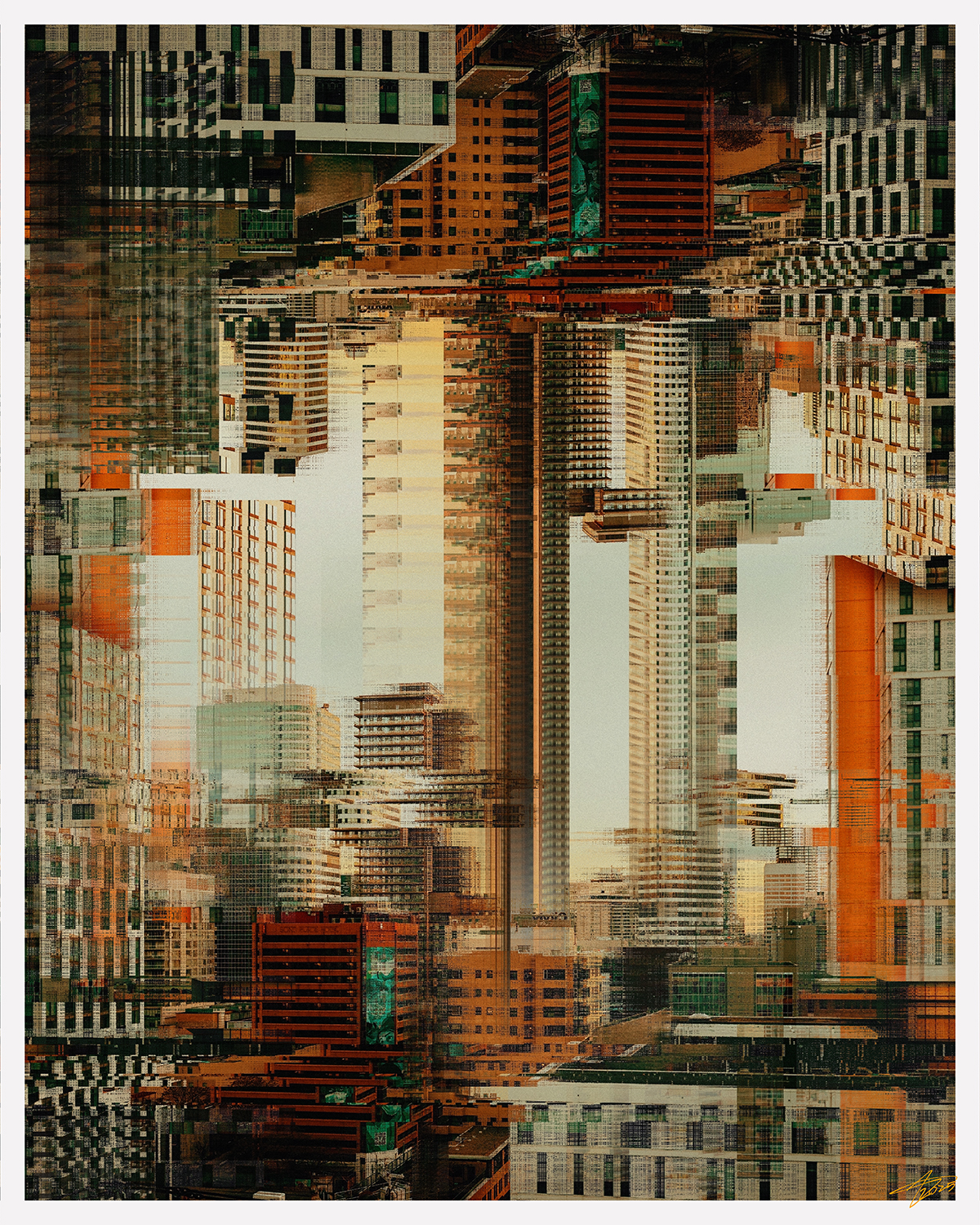
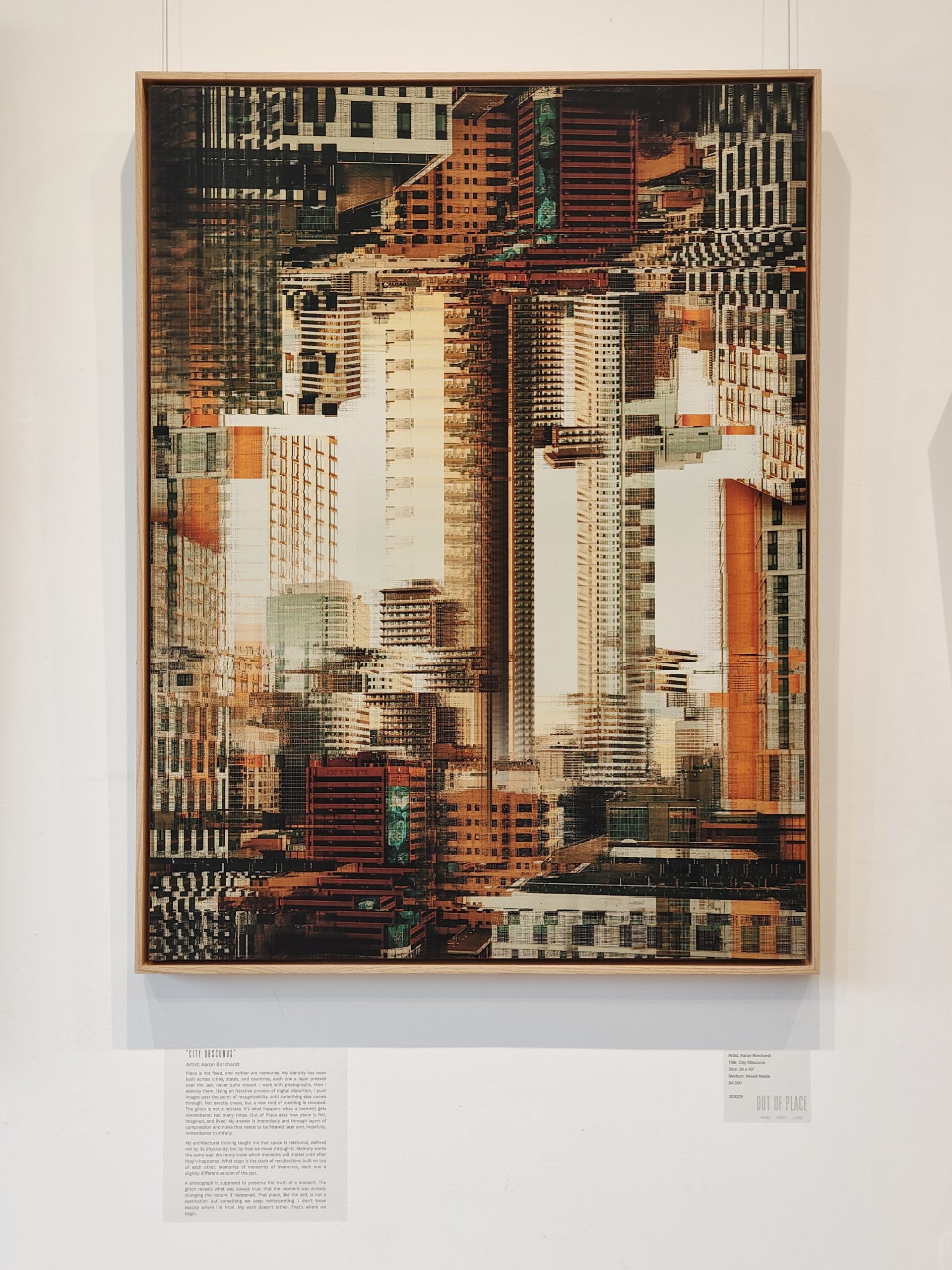
City Obscūrus | Glitch 25.806.2
$4,500.00
Artist: Aaron Borchard
Medium/Materials: Digitally Manipulated full formate Photograph, printed on 305g Epson Cold Press natural archival paper, mounted on board in walnut floater frame
Artist Statement:
Place is not fixed, and neither are memories. My identity has been built across cities, states, and countries, each one a layer pressed over the last, never quite erased. I work with photographs, then I destroy them. Using an iterative process of digital distortion, I push images past the point of recognizability until something else comes through. Not exactly chaos, but a new kind of meaning is revealed. The glitch is not a mistake. It’s what happens when a moment gets remembered too many times. Out of Place asks how place is felt, imagined, and lived. My answer is imprecisely and through layers of compression and noise that needs to be filtered later and, hopefully, remembered truthfully.
My architectural training taught me that space is relational, defined not by its physicality, but by how we move through it. Memory works the same way. We rarely know which moments will matter until after they’v happened. What stays is the stack of recollections built on top of each other, memories of memories of memories, each one a slightly different version of the last.
A photograph is supposed to preserve the truth of a moment. The glitch reveals what was always true: that the moment was already changing the instant it happened. That place, like the self, is not a destination but something we keep reinterpreting. I don’t know exactly where I’m from. My work doesn’t either. That’s where we begin.
Artist Biography:
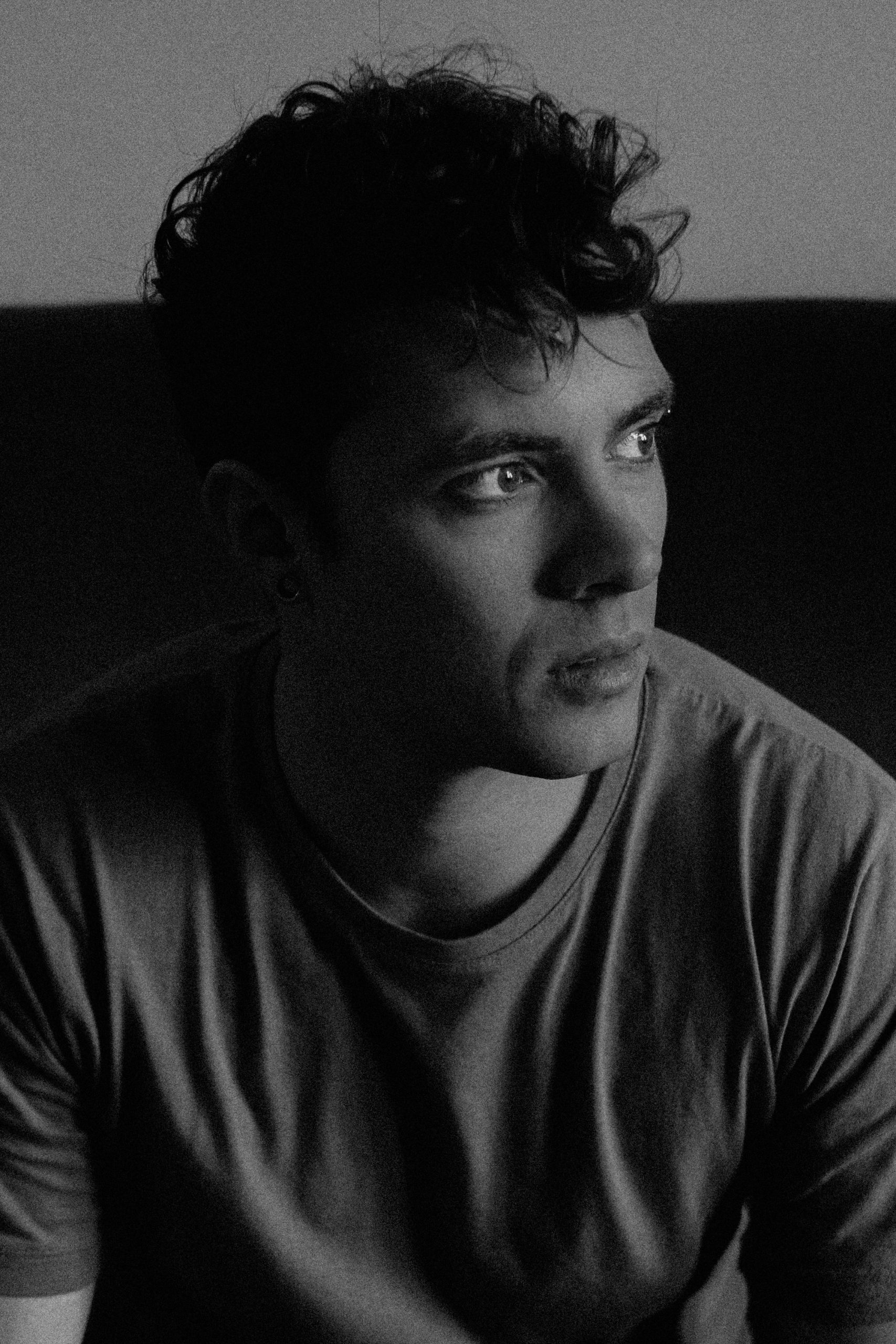
Aaron Borchardt is an architectural designer and artist based in Toronto, Canada, originally from Denver, Colorado. He holds a master’s degree in architecture from the Glasgow School of Art in Scotland, and it is this background that continues to influence his approach to artistic practice, where he combines structured, architectural thinking with an openness to experimentation and an intuitive process.
While he has been passionate about photography for many years, it was during his time at GSA that he developed a methodology for ‘glitching’ photographs. This glitch art process began with a fascination for digital distortion and how far an image, intended to preserve or represent the reality of a moment, can be altered and reinterpreted. Using an iterative process of layering, destruction, and recomposition, he explores new forms of abstraction that invite unexpected visual meanings to emerge.
Aaron’s background in architecture shapes his design thinking and the structure of his pieces. His methods continue to expand from digital approaches to hands-on physical glitch pieces, and he continues to explore the relationship between digital media and real-world representation. By distorting visuals, he obscures clear forms, which leaves interpretation to the viewer.
Each piece begins with his photography, where he captures subjects he finds significant or beautiful, then pushes them past the edge of recognisability through digital manipulation. This process transforms structured images into abstract compositions, revealing new perspectives and meaning.
For Aaron, glitch art is not just an aesthetic approach, but also a way of thinking about perspective and memory. He is interested in how memories are not fixed, but fragile, changing each time we recall them. His work explores the emotional and psychological layering that occurs when people recall the same event in different ways, and how a person’s memory evolves over time. With each recollection, alternative narratives form. Eventually, the original moment becomes less a fact and more a stack of subjective interpretations. Memories of memories of memories.
Photography allows us to freeze time and seemingly preserve the truth of a moment. But with digital tools, even those “hard facts” can be manipulated. The glitch becomes a metaphor for the instability of memory itself and how facts can be blurred, dissolved, or reconfigured into something entirely new. By distorting photographic images, Aaron explores how reality becomes transformed through layers and obstruction, both emotionally and visually.
At the heart of Aaron’s work is a tension between chaotic memory and emotional layering. He hopes his pieces provoke curiosity, invite reflection, and offer a new way of looking at memory and the beauty found in distortion and reinterpretation.